There is a coffee-stained spiral notebook sitting on the kitchen counter of nearly every family vacation home in America. Inside, scrawled in a dozen different handwriting styles, are entries from years of visits: “Caught a 5-pound bass off the dock! — The Johnsons, July 2019” and “Kids saw a bear on the trail. Best trip ever.”
That notebook is a treasure. It is also falling apart, impossible to search, and invisible to anyone who is not physically standing in the kitchen.
A digital guest book preserves everything that makes the paper version special — the memories, the recommendations, the sense of shared history — while solving the problems that make paper inadequate for a property used by multiple families across years and decades.
What a Guest Book Actually Does
A guest book is more than a sentimental artifact. For a shared property, it serves several practical functions that most families don’t realize until they start using one intentionally.
Preserving Memories Across Families
When three or four families share a property, each family creates its own set of memories there. The Andersons caught fireflies with the kids in June. The Nguyens hosted Thanksgiving and served Vietnamese pho alongside the turkey. The Campbells replaced the dock boards and then christened the new dock with a cannonball contest.
Without a guest book, these memories live only in the minds of the families who were there. A shared record lets everyone enjoy the full story of the property — not just their own chapter. Years from now, when the kids who caught those fireflies bring their own children to the cabin, they can read about that night.
Sharing Local Recommendations
Every family discovers different things during their stays. One family finds the perfect farm stand for corn. Another discovers that the marina rents kayaks by the hour. A third learns the hard way that the Italian restaurant on Main Street is terrible on weekends.
A guest book captures this local knowledge and makes it available to everyone. Instead of each family figuring things out independently, they build a collective guide to the area that improves with every visit. This is especially valuable for guests who are visiting the property for the first time — they get the benefit of years of accumulated local expertise.
Tracking Visits and Usage
From a practical property management standpoint, a guest book creates a record of who used the property and when. This is useful for:
- Resolving disputes about wear and tear. If something is damaged between visits, the guest book helps narrow down when it happened.
- Fair cost splitting. If your property agreement includes usage-based cost sharing, visit records provide the data you need.
- Maintenance context. Knowing who was at the property before a maintenance issue was reported helps with troubleshooting. “The dishwasher started leaking during the Petersons’ stay in March” is more actionable than “the dishwasher is leaking.”
- Insurance claims. In the event of property damage, a record of occupancy can support insurance documentation.
Connecting Generations
This is the guest book’s most underrated function. Shared vacation homes are often generational assets — properties that pass from parents to children to grandchildren. A guest book becomes a family artifact that spans decades.
Imagine a teenager reading a guest book entry from their grandfather, written 30 years earlier, describing catching fish on the same lake. Or a new family member — a spouse joining the co-ownership group — reading through years of entries and understanding the property’s history and significance before they ever visit.
The guest book turns a shared property from a financial arrangement into a living family tradition.
Why Paper Falls Short
Paper guest books work. They have worked for decades, and there is something charming about the handwritten entries, the doodles from kids, the pressed wildflowers between pages. Nobody wants to lose that character.
But paper has real limitations for a shared property:
It lives in one place. The guest book sits at the property. You can’t browse it from home. If you want to check a recommendation before your trip, you have to ask someone who remembers or wait until you arrive.
It gets lost or damaged. Water damage, spilled coffee, a guest who accidentally takes it home thinking it is a regular notebook. Paper guest books are surprisingly fragile for the value they hold.
It is not searchable. “What was the name of that pizza place the Hendersons recommended three years ago?” Good luck finding it in 150 pages of handwritten entries.
It excludes remote families. If one co-owning family lives across the country and visits less frequently, they miss the ongoing narrative between their visits. They feel disconnected from the property’s story.
It fills up. When the notebook is full, someone has to buy a new one. The old one sits on a shelf, gradually forgotten.
Going Digital Without Losing the Soul
The concern with a digital guest book is that it will feel sterile — a database instead of a keepsake. That is a valid concern, and the solution is design, not technology.
A good digital guest book should:
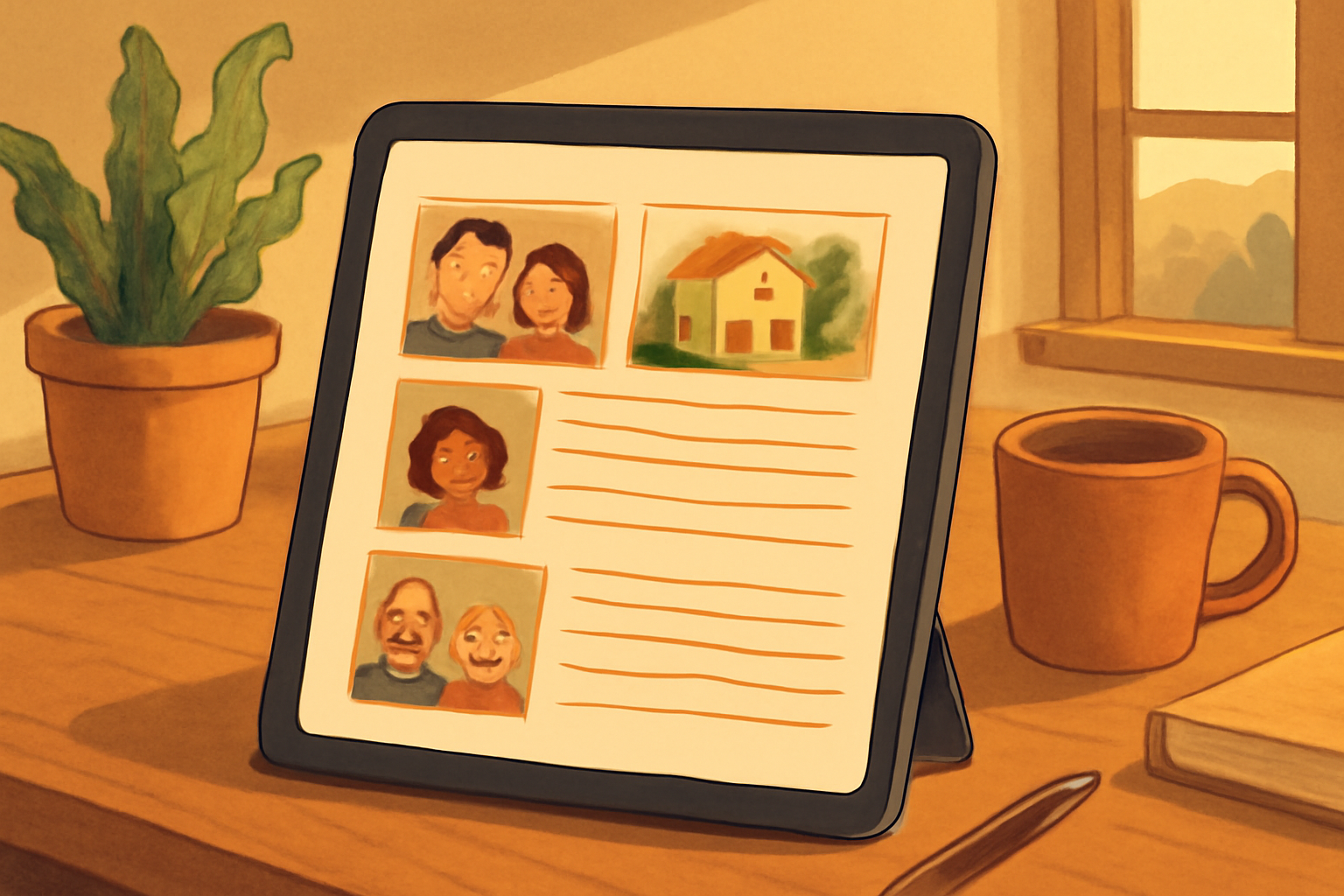
Accept photos alongside text. A picture of the kids on the dock says more than a paragraph of description. Let every entry include images.
Feel casual and personal. The tone should match a paper guest book — conversational, warm, even funny. This is not a formal journal. It is a place where someone writes “Raccoons got into the trash again. The big one is back and he has zero fear” alongside a blurry photo.
Be visible to everyone. Every co-owner and family member should be able to read the guest book from anywhere, anytime. The whole point is shared access.
Preserve the timeline. Entries should appear chronologically so readers can follow the property’s story over time. Seasonal changes, gradual improvements, annual traditions — the timeline tells a story that individual entries cannot.
Include useful details. Date of visit, who was there, weather, any maintenance notes. This turns sentimental entries into practical records without making them feel transactional.
What About Guests?
When you host friends, extended family, or renters, a guest book entry serves double duty. For the guest, it is a way to say thank you and share their experience. For the owners, it captures feedback about the property — what worked, what didn’t, what guests wish they had known on arrival.
Some families create a guest-specific view of their property information that includes house rules, the Wi-Fi password, local recommendations from previous guests, and emergency contacts. This acts as a welcome guide that improves itself over time as guests and owners add to it.
DoorPact’s guest hosting features combine the guest book with a local guide and house info — so every visitor gets the benefit of accumulated knowledge from everyone who has stayed before them.
Getting Started With a Digital Guest Book
You don’t need to abandon your paper guest book to go digital. Many families keep both — the paper version on the counter for charm and the digital version for accessibility and permanence.
If you are starting fresh, here are a few tips:
Seed it with history. If you have an existing paper guest book, take photos of favorite entries and post them as the first entries in your digital version. This gives the digital book instant character and context.
Make it easy to contribute. If adding an entry requires logging into a complicated system, people won’t do it. One tap to add a note and a photo is the target experience.
Include prompts. Not everyone knows what to write. Simple prompts help: “What did you do this visit?” “Any recommendations for the next family?” “Anything that needs attention at the property?”
Celebrate entries. When someone adds a great entry — a photo of a sunset, a funny story about the neighbor’s goat, a recommendation that leads to an amazing dinner — acknowledge it. The more valued the entries feel, the more people will contribute.
More Than Memories
A digital guest book starts as a nice-to-have and quickly becomes essential. It is where your property’s story lives — searchable, shareable, and safe from coffee spills. It connects your family across distance and time in a way that a group text never will.
If you are managing a shared vacation home and want a guest book that is integrated with your calendar, your task lists, and your property communication, DoorPact includes a digital guest book alongside everything else your co-ownership group needs. Set up your property and start building a record that your family will read for generations.