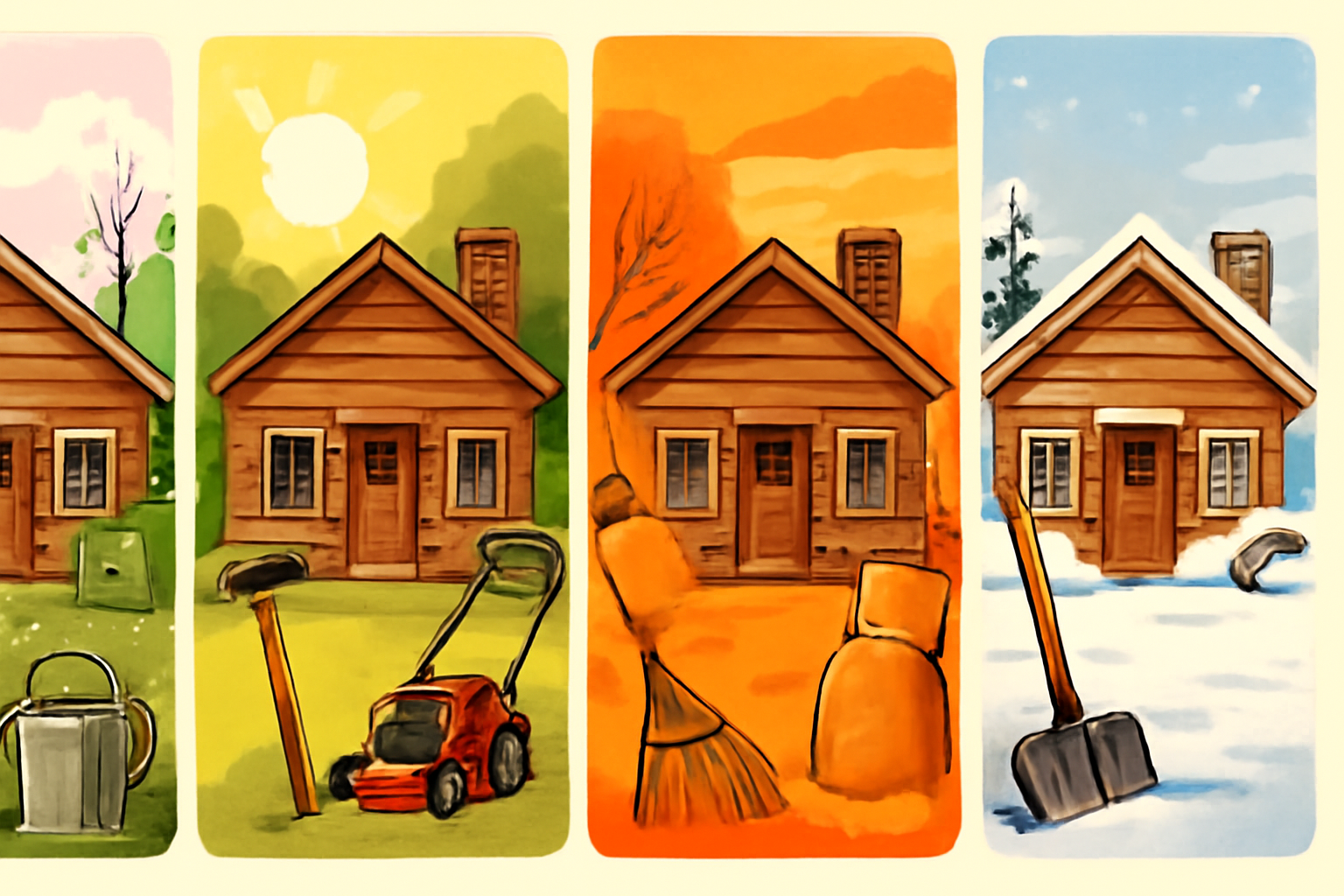
A vacation home that’s well-maintained holds its value, stays comfortable, and causes fewer emergency phone calls at midnight. But when multiple families share a property, maintenance tasks have a way of falling into one of two categories: things everyone assumes someone else is handling, and things nobody realizes need handling at all.
A seasonal maintenance schedule fixes both problems. It lays out exactly what needs to happen and when, so nothing gets missed and no single owner gets stuck doing everything.
This guide walks through every season with specific tasks, plus practical advice on dividing the workload fairly among co-owners.
Spring: Open Up and Assess
Spring is assessment season. If the property sat dormant through winter, you’re looking for damage. If it was used year-round, you’re clearing the effects of cold weather and preparing for the busy summer months.
Exterior Tasks
- Inspect the roof for missing, cracked, or curling shingles. Check flashing around chimneys and vents. Winter ice and wind take a toll.
- Clean gutters and downspouts. Clear debris from fall and winter. Ensure water flows away from the foundation.
- Check the foundation for cracks or signs of water intrusion. Walk the perimeter and look for settling or erosion.
- Power wash siding, decks, and walkways. Remove winter grime, mold, and mildew before they cause permanent staining.
- Inspect the deck and porch for loose boards, protruding nails, or wood rot. Sand and reseal if needed.
- Service the lawn mower and outdoor equipment. Fresh oil, new spark plugs, sharpened blades.
- Turn on exterior water spigots and check for leaks. Reconnect garden hoses.
- Test outdoor lighting along walkways, porches, and driveways. Replace bulbs and clean fixtures.
Interior Tasks
- Test smoke detectors and carbon monoxide alarms. Replace batteries (or the units themselves if they’re past their expiration date).
- Run all faucets and flush toilets to clear stale water from pipes.
- Inspect under sinks and around toilets for leaks or water damage.
- Replace HVAC filters and schedule a professional tune-up for the air conditioning system before summer demand.
- Check the water heater for sediment buildup. Drain and flush if needed.
- Deep clean the entire property. Spring cleaning is especially important for shared homes that may have had sporadic winter use.
- Inspect windows and doors for drafts, damaged seals, or condensation between panes.
- Check for pest activity. Look for droppings, nesting material, or damage from rodents and insects. Schedule treatment if needed.
Summer: Maintain and Monitor
Summer is peak usage season for most vacation homes. The focus shifts to keeping systems running smoothly, managing higher wear-and-tear from frequent guests, and staying ahead of problems before they interrupt someone’s vacation.
Exterior Tasks
- Maintain landscaping on a regular schedule: mowing, trimming, weeding, and watering.
- Inspect and clean the grill. Check gas connections for leaks. Replace propane tanks as needed.
- Service the pool or hot tub (if applicable). Test water chemistry weekly. Clean filters monthly.
- Check exterior paint and stain. Touch up any areas showing wear before sun exposure causes further damage.
- Inspect the driveway and walkways for cracks or trip hazards. Fill and seal as needed.
- Monitor for wasp nests, ant trails, and other pest activity around the exterior. Address early before they become infestations.
Interior Tasks
- Monitor the air conditioning system. Change filters monthly during heavy use. Listen for unusual sounds.
- Check for humidity and mold, especially in basements, bathrooms, and closets. Run dehumidifiers if moisture levels are high.
- Inspect plumbing after periods of heavy use. Look for slow drains, running toilets, or dripping faucets.
- Restock supplies between guest stays: linens, cleaning products, kitchen basics, bathroom essentials. A shared supply tracking system helps co-owners know what needs restocking without redundant purchases.
- Document any damage or wear that occurs during the season. Log it promptly so repairs can be scheduled during the quieter fall months.
Fall: Prepare and Protect
Fall maintenance is about preparing the property for winter — whether that means full winterization or simply reinforcing the home against cold weather. It’s also the best time to handle repairs identified during the busy summer season.
Exterior Tasks
- Clean gutters and downspouts again after leaves have fallen. Clogged gutters cause ice dams and water damage in winter.
- Rake leaves and clear debris from the yard, flower beds, and around the foundation.
- Disconnect and drain garden hoses. Shut off exterior water spigots and insulate exposed pipes.
- Store outdoor furniture, or cover and secure it for winter. Clean cushions and store them indoors.
- Inspect the roof one more time before winter. Address any issues found during the spring inspection or caused by summer storms.
- Seal gaps around windows, doors, and the foundation where cold air and pests could enter.
- Test exterior lighting for the shorter days ahead. Consider adding motion-sensor lights for safety.
- Service the snow blower (if applicable) and stock up on ice melt and shovels.
Interior Tasks
- Schedule a furnace or heating system tune-up. Replace filters and test the system before you need it.
- Reverse ceiling fan direction to clockwise, which pushes warm air down in heated rooms.
- Inspect the fireplace and chimney. Schedule a professional cleaning if the fireplace was used regularly. Check the damper and flue.
- Test the sump pump (if applicable). Pour water into the pit to ensure the pump activates and drains properly.
- Check insulation in the attic, crawl space, and around pipes. Add insulation where it’s thin or missing.
- Drain and winterize irrigation systems if the property freezes.
- Deep clean before winter. A thorough fall cleaning prevents musty odors in a home that may sit closed for weeks or months.
Winter: Monitor and Respond
Winter maintenance depends heavily on your property’s climate and usage pattern. A cabin in Minnesota that sits empty from November through March requires a different approach than a Florida beach house that sees year-round visitors.
For Properties in Cold Climates
- Keep the heat on — even in an empty home. Set the thermostat no lower than 55 degrees F to prevent pipes from freezing.
- Monitor for frozen pipes. If the property has a smart thermostat or water leak sensor, check it regularly. A burst pipe in an empty home can cause catastrophic damage.
- Arrange for snow removal on driveways, walkways, and the roof (if snow accumulation is significant).
- Check the property after major storms. If you can’t visit in person, ask a local contact or neighbor to do a walkthrough.
- Inspect for ice dams on the roof edges. These form when attic heat melts snow on the roof and it refreezes at the eaves, forcing water under the shingles.
- Watch for pest intrusion. Rodents seek warmth in winter. Check for signs of entry and set traps if needed.
For Properties in Warm Climates
- Continue regular landscaping and irrigation maintenance.
- Service the air conditioning system during the off-peak season when HVAC technicians are more available.
- Inspect for hurricane or storm season damage and complete any deferred repairs.
- Check weather stripping and seals to maintain energy efficiency during mild weather months.
All Properties
- Review the year’s maintenance log and identify any deferred repairs or recurring issues.
- Plan (and budget for) capital improvements for the coming year: new appliances, roof replacement, deck rebuilding, etc.
- Update the emergency contact list with current numbers for plumbers, electricians, HVAC technicians, and local emergency services.
Who Handles What: Dividing Maintenance Fairly
A checklist only works if someone is responsible for each item. In shared properties, there are several approaches to distributing the maintenance workload.
Option 1: Seasonal Rotation
Each co-owner takes ownership of one season’s maintenance. Family A handles spring, Family B handles summer, and so on. This keeps the workload balanced and gives each family clear accountability.
Option 2: Task-Based Assignment
Assign tasks based on skill, proximity, or preference. The co-owner who lives closest handles winterization. The one with construction experience manages structural inspections. The one who enjoys gardening handles landscaping.
Option 3: Hired Property Manager
For properties where no owner lives nearby, a local property manager or caretaker can handle routine maintenance. Split the cost among all owners and treat it as a shared property expense.
Option 4: Shared Task Tracking
Regardless of how you divide the work, use a shared system to track what’s been done, what’s pending, and what’s overdue. A checklist and task management platform gives every co-owner visibility into the property’s maintenance status — so nobody has to wonder whether the gutters were cleaned or the furnace was serviced.
Building Your Annual Calendar
Take the tasks from each season and map them to specific months. Assign owners. Set reminders. The result is an annual maintenance calendar that runs itself:
| Month | Key Tasks | Owner |
|---|---|---|
| March | Roof inspection, gutter cleaning, HVAC tune-up | Family A |
| May | Deck sealing, outdoor furniture setup, pest inspection | Family B |
| July | Mid-season deep clean, supply restock, plumbing check | Family C |
| September | Gutter cleaning, winterization prep, furnace tune-up | Family A |
| November | Full winterization, storm prep, annual review | Family B |
Adjust for your climate, your property’s specific needs, and your group’s capacity.
Keep Your Property in Great Shape, Together
Seasonal maintenance isn’t glamorous, but it’s what separates vacation homes that last for generations from ones that become money pits. When every co-owner knows what needs doing — and can see that it’s getting done — the property stays in great condition and the ownership experience stays positive.
DoorPact helps shared property owners manage maintenance with shared checklists, task assignments, and expense tracking. Every repair is logged, every cost is split, and every co-owner stays informed. Get started today and keep your shared home running smoothly year-round.